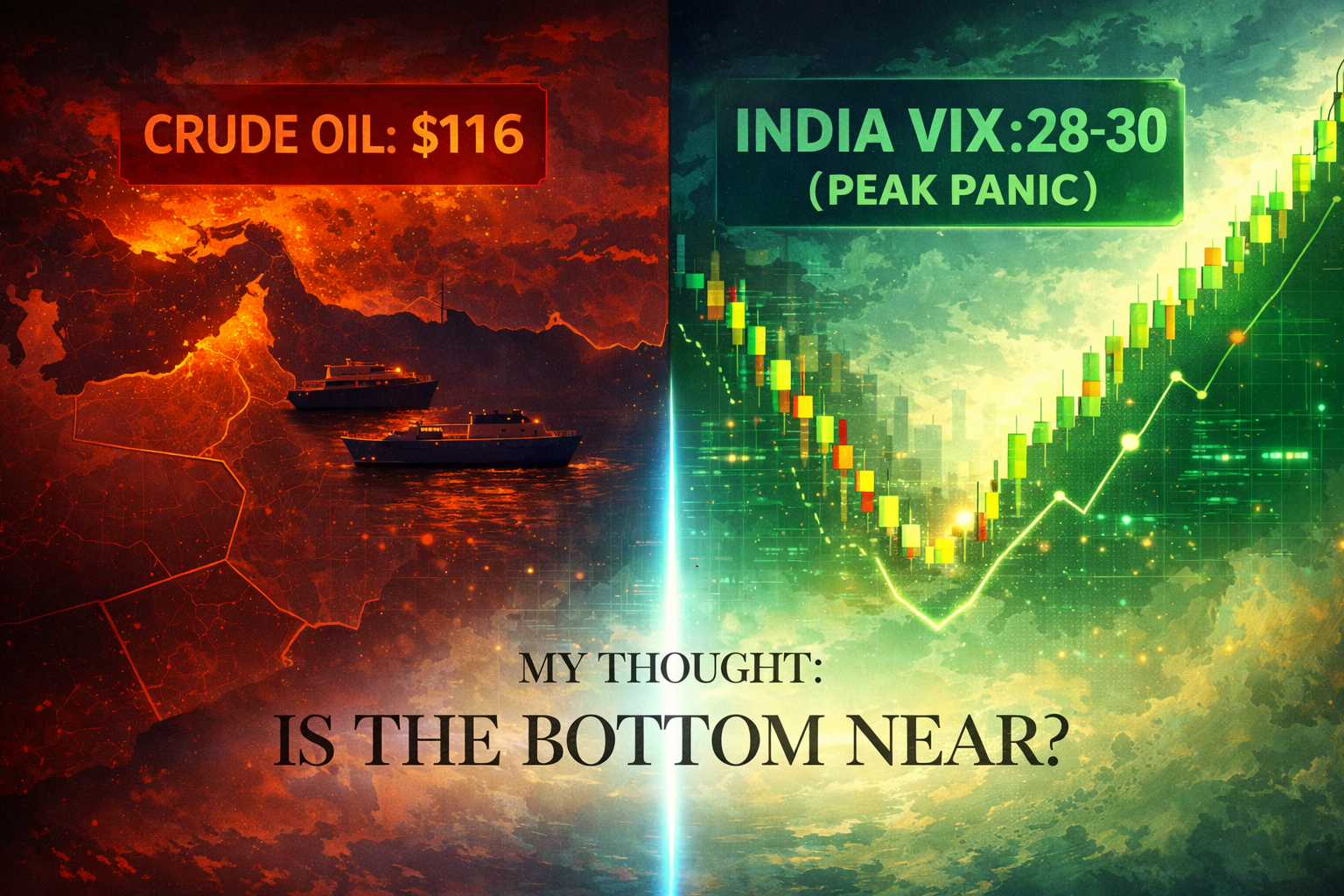
As we ring down the curtains on Financial Year 2025-26 on this Mahavir Jayanti, investors are staring at a sea of red. The final trading session on March 30 was nothing short of a “bloodbath,” with the Sensex plummeting over 1,600 points in a single day. While the headlines look grim, a closer look at the data suggests that we might be closer to a turning point than most realize.
The FY26 Scoreboard: 1Y Returns vs. The Fall from Peak
It has been a year of “giving back gains.” After a resilient mid-year, the March correction—triggered by the US-Iran conflict—pulled every major index significantly off its All-Time High (ATH).
| Index | 1Y Performance % | Fall from All-Time High % |
| BSE Sensex | -7.06% | ~14.5% |
| Nifty 50 | -5.05% | ~12.2% |
| Bank Nifty | -3.82% | ~18.6% |
| Midcap 150 | +1.62% | ~11.0% |
| Smallcap 250 | -5.37% | ~16.8% |
The Sectoral Divide: Winners and Losers
While the broad market indices struggled, the real story of the financial year was the massive divergence between sectors. The undisputed king of FY26 was the Nifty PSU Bank sector, which rallied a staggering 27.7%. This performance was fueled by record-breaking quarterly profits and a surge in credit demand. Close on its heels was the Nifty Metal index, which gained 24% over the year, led by heavyweights like Hindalco and NALCO.
On the flip side, it was a year to forget for the service-oriented sectors. The worst-performing sector was Nifty Media, which crashed by ~22.2%. Perhaps more impactful was the decline in Nifty IT, which fell ~18.8% as a “bear market” took hold amid US recession fears and shifting tech spends. Additionally, the Nifty Realty sector saw a correction of over ~16% as interest rates remained higher for longer.
The “VIX Bottom” Theory: Why the End is Near
Currently, the India VIX is hovering around 27.89, hitting a 52-week high. For a seasoned investor, this isn’t just a sign of fear—it’s a signal of opportunity.
Historically (excluding the extraordinary Black Swan of COVID-19), the Indian market has consistently formed a “bottom” when the VIX hits the 28–36 range. High VIX indicates peak panic; once that panic is fully priced in, the recovery begins. To my fellow investors-
The Bottom is Near, My Dear Friend.
The Energy Shadow: Strait of Hormuz and India’s Macro Risk
The primary culprit behind this volatility is Brent Crude, which hit $116/barrel this week. The global market has finally realized the critical fragility of the Strait of Hormuz. With this chokepoint facing controlled transit and selective blockades due to the West Asia conflict, supply chains are fracturing.
For India, this presents three massive concerns:
- Inflationary Pressure: High energy prices will eventually result in higher transportation costs and headline inflation.
- Current Account Deficit (CAD): Our oil bill is ballooning, putting immense pressure on the Rupee.
- Recession Risk: In this environment, prolonged high energy costs could open the door for a growth slowdown or recession in FY27.
My Thought:
While every other person is focusing on the huge ₹1.22 lakh crore sell figure of FIIs, they are missing one crucial thing: DIIs bought almost ₹1.43 lakh crore in the last one month alone. While the headlines are screaming about foreign outflows and the “bloodbath,” the underlying data tells a story of incredible domestic strength. We aren’t just absorbing the hit; we are out-buying the exit. This massive influx—fueled by consistent retail SIPs, institutions and pension funds—is a massive vote of confidence in India’s structural story.
Yes, the energy crisis at the Strait of Hormuz is a real macro threat to our inflation targets, but this level of domestic conviction acts as a powerful “cushion.” With the VIX knocking on the door of the 28–30 range, history suggests that the “pain phase” is reaching its peak. The bottom is near, my dear friend. Stay disciplined, and remember that when the dust settles, it’s this domestic conviction that usually leads the next rally.
Share if you find this article helpful!
Disclaimer: This post is for educational purposes for the readers of rittikpaul.in and does not constitute financial advice. Please consult with a SEBI-registered advisor before making investment decisions.